

Embark on a journey through the world of ecommerce logistics and shipping with our guide on best practices. From warehouse optimization to shipping strategies, this article delves into key aspects that can enhance the efficiency and effectiveness of your online business operations.
Importance of Ecommerce Logistics
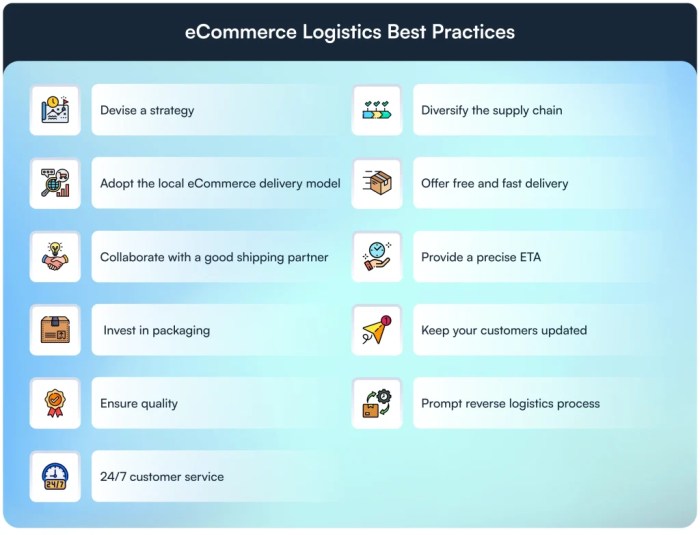
Efficient logistics play a crucial role in the success of ecommerce businesses. From managing inventory to ensuring timely delivery, a well-organized logistics system can make or break an online store.Logistics directly impact customer satisfaction and retention. Customers expect fast and reliable shipping, order tracking, and hassle-free returns.
A seamless logistics process can enhance the overall shopping experience, leading to repeat purchases and positive reviews.
Cost Savings through Streamlined Shipping
- Optimizing shipping routes and methods can reduce transportation costs significantly.
- Utilizing warehouse space efficiently can lower storage expenses.
- Implementing automated inventory management systems can minimize errors and prevent costly stockouts.
Warehousing Best Practices
When it comes to ecommerce logistics, efficient warehousing practices are crucial for ensuring smooth operations and customer satisfaction. Optimizing warehouse layout, managing inventory effectively, and leveraging technology can significantly improve overall efficiency and productivity.
Optimizing Warehouse Layout
One key strategy for optimizing warehouse layout is to organize the storage space based on product demand and frequency of order picking. This can help reduce travel time for workers and improve order fulfillment speed. Additionally, implementing a systematic labeling and shelving system can further streamline the picking and packing process.
Inventory Management Techniques
Preventing stockouts and overstocking is essential to maintaining a balanced inventory level. Utilizing inventory tracking systems can provide real-time visibility into stock levels and help in forecasting demand accurately. Implementing just-in-time inventory management practices can also help minimize excess inventory and storage costs.
Role of Technology in Warehouse Operations
Automation plays a significant role in enhancing warehouse operations efficiency. Technologies such as robotics, conveyor systems, and automated storage and retrieval systems (AS/RS) can help speed up order processing and reduce human error. Inventory tracking systems integrated with barcode scanners or RFID technology can ensure accurate inventory management and minimize discrepancies.
Shipping Strategies
When it comes to ecommerce logistics, choosing the right shipping strategy is crucial for the success of your business. Let's explore the various shipping options available and discuss the pros and cons of different approaches.
In-House Shipping vs. Third-Party Logistics Providers
One option for ecommerce businesses is to handle shipping in-house, where the company manages the entire shipping process internally. On the other hand, businesses can also opt to outsource their shipping needs to third-party logistics providers. Let's compare the two:
- In-House Shipping:Pros include greater control over the shipping process, potential cost savings for large volume shipments, and the ability to provide a more personalized experience for customers. However, cons may include higher upfront costs for infrastructure and resources, as well as the need to stay updated on shipping regulations and carrier options.
- Third-Party Logistics Providers:Pros include access to expertise and infrastructure without the need for significant upfront investment, as well as the ability to scale more easily. Cons may include less control over the shipping process, potential higher costs for smaller businesses, and reliance on a third party for customer satisfaction.
Comparison of Shipping Carriers
Choosing the right shipping carrier is essential for ensuring timely and reliable deliveries to your customers. Let's compare different shipping carriers based on cost, speed, and reliability:
| Shipping Carrier | Cost | Speed | Reliability |
|---|---|---|---|
| FedEx | Mid-range | Fast | High |
| UPS | Mid-range | Fast | High |
| USPS | Low | Varies | Medium |
Order Fulfillment Process
When it comes to order fulfillment in ecommerce, it is crucial to have a streamlined process in place to ensure orders are processed accurately and efficiently. From the moment an order is received to the point it is shipped out to the customer, each step plays a vital role in customer satisfaction and retention
Steps involved in Order Fulfillment
- Order Processing: This involves receiving the order, verifying payment, and preparing the order for shipment.
- Picking: The process of locating and collecting items from the warehouse to fulfill the order.
- Packing: Safely packaging the items to prevent damage during transit.
- Shipping: Handing over the package to the carrier for delivery to the customer.
Tips for Increasing Order Accuracy and Reducing Fulfillment Errors
- Implement barcode scanning technology to minimize errors during picking and packing.
- Regularly train staff members on proper order fulfillment procedures to reduce mistakes.
- Utilize order management software to automate and track the fulfillment process for better accuracy.
- Perform regular quality checks to ensure orders are packaged correctly before shipping.
Importance of Real-Time Order Tracking for Customers
Real-time order tracking provides customers with visibility into the status of their orders, increasing transparency and trust in the ecommerce business. Customers can track their orders at every stage of the fulfillment process, from packaging to delivery, giving them peace of mind and reducing inquiries to customer service.
Returns Management
Having a clear and efficient returns policy is crucial for any ecommerce business. It not only helps in building trust with customers but also plays a significant role in maintaining customer satisfaction and loyalty. A hassle-free returns process can make a big difference in the overall shopping experience for customers.
Best Practices for Handling Returns and Exchanges
- Clearly communicate the return policy on your website, including information on how to initiate a return, timeframes, and any associated fees.
- Streamline the returns process by providing pre-paid return labels and easy-to-follow instructions.
- Ensure prompt refunds or exchanges once the returned items are received and inspected.
- Regularly review return data to identify trends and potential issues that can be addressed to reduce returns.
- Train customer service representatives to handle returns professionally and efficiently, resolving any issues promptly.
Impact of Returns on Overall Customer Satisfaction and Loyalty
Returns can have a significant impact on customer satisfaction and loyalty. A smooth and hassle-free returns process can turn a negative experience into a positive one, leading to increased customer trust and loyalty. On the other hand, a complicated or inefficient returns process can result in frustrated customers and damage the reputation of your brand.
By prioritizing returns management and implementing best practices, you can enhance the overall shopping experience for your customers and build long-lasting relationships with them.
Conclusive Thoughts
In conclusion, mastering the best practices for ecommerce logistics and shipping can pave the way for smoother operations, cost savings, and increased customer satisfaction. Implementing these strategies can set your online store on the path to success in the competitive ecommerce landscape.
FAQ Section
How can efficient logistics benefit an ecommerce business?
Efficient logistics can improve order processing times, reduce shipping costs, and enhance customer satisfaction by ensuring timely deliveries.
What are some common inventory management techniques to prevent stockouts?
Implementing demand forecasting, setting reorder points, and using inventory tracking systems can help prevent stockouts.
When should an ecommerce business consider using third-party logistics providers for shipping?
Ecommerce businesses should consider third-party logistics providers when they need to scale quickly, access specialized services, or reduce shipping costs.

