

Exploring the realm of Blockchain Integration in Ecommerce Supply Chains unveils a transformative landscape where transparency and security take center stage. As technology continues to reshape the way we conduct business, blockchain emerges as a powerful tool in revolutionizing supply chain operations.
This article delves into the benefits, challenges, use cases, and future trends of integrating blockchain in the dynamic world of ecommerce supply chains.
Benefits of Blockchain Integration in Ecommerce Supply Chains
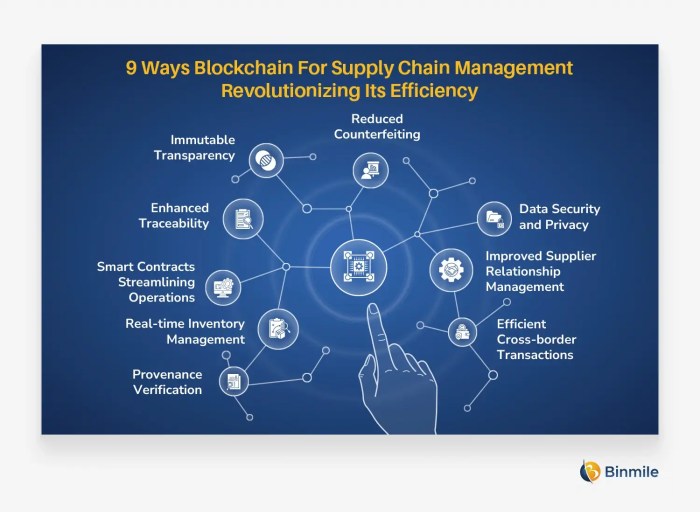
Blockchain technology offers numerous advantages when integrated into ecommerce supply chains, revolutionizing the way businesses operate and enhancing customer experiences. By leveraging blockchain, companies can achieve improved transparency, reduced fraud, cost savings, and enhanced data security and privacy.
Improved Transparency in Supply Chain Operations
Blockchain technology provides an immutable and transparent ledger that records all transactions and data exchanges within the supply chain. This transparency allows stakeholders to track products from their origin to the final destination, ensuring authenticity and quality throughout the process.
By having a clear view of the supply chain, businesses can enhance trust with customers and partners, leading to increased credibility and loyalty.
Reduction of Fraud and Counterfeit Products
One of the significant benefits of blockchain integration in ecommerce supply chains is the reduction of fraud and counterfeit products. With blockchain's decentralized and secure nature, it becomes nearly impossible for malicious actors to tamper with product information or introduce counterfeit items into the supply chain.
This increased security not only protects consumers from purchasing fake products but also safeguards the reputation of businesses.
Cost Savings Achieved through Blockchain Integration
Blockchain technology streamlines supply chain processes by eliminating intermediaries, reducing paperwork, and automating transactions. These efficiencies result in cost savings for businesses by cutting down on operational expenses and improving overall productivity. Additionally, the transparency provided by blockchain can help identify inefficiencies in the supply chain, enabling companies to optimize their operations and reduce unnecessary costs.
Enhanced Data Security and Privacy for Ecommerce Transactions
In the digital age, data security and privacy are paramount concerns for businesses and consumers alike. Blockchain technology employs cryptographic principles to secure data exchanges, ensuring that sensitive information remains protected from unauthorized access or breaches. By integrating blockchain into ecommerce supply chains, companies can enhance the security of online transactions, protect customer data, and build trust with their audience.
Challenges of Implementing Blockchain in Ecommerce Supply Chains
Blockchain technology offers numerous benefits to ecommerce supply chains, but its implementation is not without challenges. From regulatory hurdles to scalability issues, there are several obstacles that organizations may face when integrating blockchain technology.
Regulatory Hurdles
One of the major challenges of implementing blockchain in ecommerce supply chains is navigating the complex regulatory environment. Different countries have varying regulations regarding data privacy, security, and digital transactions. Ensuring compliance with these regulations while using blockchain technology can be a daunting task for organizations.
Scalability Issues
Another challenge that organizations may encounter is scalability issues when implementing blockchain in large ecommerce supply chains. As the volume of transactions increases, the blockchain network may face performance bottlenecks, slowing down transaction speeds and increasing costs. Finding solutions to scale blockchain networks effectively is crucial for successful implementation in large-scale supply chains.
Interoperability Complexities
Interoperability between different blockchain platforms is another challenge that organizations need to address. With multiple blockchain networks in use, ensuring seamless communication and data exchange between them can be complex. Lack of interoperability can hinder the efficiency and effectiveness of blockchain integration in ecommerce supply chains.
Resistance from Stakeholders
Resistance from stakeholders, including suppliers, manufacturers, and customers, can also pose a challenge to the adoption of blockchain technology in ecommerce supply chains. Some stakeholders may be hesitant to embrace blockchain due to concerns about transparency, security, or changes to existing processes.
Overcoming this resistance and gaining buy-in from all parties involved is essential for successful implementation.
Use Cases of Blockchain Integration in Ecommerce Supply Chains
Blockchain technology has revolutionized the way ecommerce supply chains operate, offering transparency, security, and efficiency. Let's explore some key use cases of blockchain integration in the ecommerce industry.
Tracking and Authenticating Products
Blockchain enables the tracking and authentication of products throughout the supply chain. Each product is assigned a unique digital identity recorded on the blockchain, allowing retailers and consumers to verify its origin, authenticity, and journey from manufacturer to delivery.
Role of Smart Contracts
Smart contracts play a crucial role in automating supply chain processes through blockchain. These self-executing contracts facilitate transactions and enforce agreements without the need for intermediaries, streamlining processes such as payments, order fulfillment, and inventory management.
Successful Implementations in Ecommerce Supply Chains
Several companies have successfully implemented blockchain in their ecommerce supply chains. For example, Walmart uses blockchain to track the source of its food products, ensuring transparency and safety for consumers. Similarly, Maersk and IBM collaborated to create TradeLens, a blockchain platform for global trade management.
Real-Time Tracking and Inventory Management
Blockchain enables real-time tracking of shipments and inventory management in ecommerce supply chains. By recording every transaction on a shared ledger, stakeholders can monitor the movement of goods, reduce the risk of fraud, and optimize inventory levels to meet customer demand efficiently.
Future Trends in Blockchain Integration for Ecommerce Supply Chains
Blockchain technology continues to evolve, shaping the future of ecommerce supply chains. Let's delve into some of the exciting trends that are expected to transform the industry.
Integration of Internet of Things (IoT) Devices with Blockchain
The integration of Internet of Things (IoT) devices with blockchain technology holds immense potential for enhancing supply chain management in ecommerce. By connecting physical devices to blockchain networks, real-time tracking and monitoring of products can be achieved, ensuring transparency and efficiency throughout the supply chain.
Tokenization and Cryptocurrency Payments in Ecommerce Transactions
The emergence of tokenization and cryptocurrency payments is revolutionizing ecommerce transactions. By leveraging blockchain technology, businesses can enable secure and seamless payment processes, eliminating the need for intermediaries and reducing transaction costs. This trend is expected to gain traction as more consumers embrace digital currencies.
Artificial Intelligence Enhancing Blockchain Capabilities
Artificial intelligence (AI) is poised to enhance blockchain capabilities in the ecommerce sector. By integrating AI algorithms with blockchain technology, businesses can automate decision-making processes, optimize supply chain operations, and improve data analytics. This synergy between AI and blockchain is set to drive innovation and efficiency in ecommerce supply chains.
Evolution of Blockchain Standards and Protocols for Supply Chain Optimization
The evolution of blockchain standards and protocols is crucial for optimizing supply chain operations in ecommerce. As the technology matures, industry stakeholders are working towards establishing common standards and protocols to ensure interoperability, scalability, and security across blockchain networks. This standardization is expected to streamline processes, enhance trust among participants, and unlock new opportunities for collaboration within supply chains.
Final Summary
In conclusion, Blockchain Integration in Ecommerce Supply Chains represents a pivotal shift towards enhanced efficiency, security, and trust in the digital marketplace. As businesses navigate the complexities of supply chain management, blockchain stands out as a beacon of innovation, offering endless possibilities for growth and optimization.
Embrace the future of ecommerce with blockchain integration, where transparency and security pave the way for a seamless and trustworthy online shopping experience.
Questions and Answers
How does blockchain technology improve transparency in supply chain operations?
Blockchain ensures transparency by creating an immutable and decentralized ledger that tracks every transaction, providing a clear view of the entire supply chain process.
What are some regulatory hurdles faced when integrating blockchain technology in ecommerce?
Regulatory challenges include compliance issues related to data protection, cross-border transactions, and legal recognition of blockchain-based contracts.
How can blockchain enable real-time tracking of shipments and inventory management?
By leveraging blockchain's decentralized nature, stakeholders can access real-time data on shipments and inventory status, enhancing visibility and efficiency in supply chain management.
![Best Cross-Border E-Commerce Platforms in Review [2025]](https://ecommerce.harianterbit.com/wp-content/uploads/2025/10/90d852da59455a1b90c78e8e456c2145-75x75.jpg)
